
Hoshiarpur/Daljeet Ajnoha/August 4 :
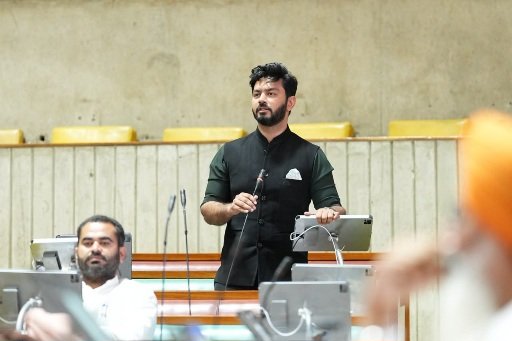
Raising the issue of the Centre’s E20 fuel policy during the ongoing Punjab Vidhan Sabha session, Chabbewal MLA Dr. Ishank Kumar expressed serious concerns over its impact on consumers, farmers, water resources and the automobile sector. Speaking during the discussion, he urged the Government to address the growing apprehensions surrounding the policy and ensure that the interests of ordinary citizens are protected.
Dr. Ishank Kumar said that when concerns regarding the implementation of E20 were initially raised, instead of taking the matter seriously, the Government attempted to divert attention towards other issues. He stated that as public concerns remained unaddressed, Aam Aadmi Party National Convenor Arvind Kejriwal personally took up the issue and launched a nationwide campaign to highlight its implications.
He informed the House that a National Townhall Campaign was organised across the country against the E20 policy, during which more than 2 lakh citizens signed petitions opposing its implementation, while over 7 lakh people participated through the live Townhall broadcast, reflecting the widespread concern among the public.
Questioning the rationale behind the policy, Dr. Ishank Kumar said the Government had projected E20 as a step that would reduce petrol prices, but people had instead witnessed a sharp increase in fuel prices over the years. He further expressed concern that E20 fuel could adversely affect vehicles not specifically designed for ethanol blending, creating uncertainty for millions of existing vehicle owners. Dr. Ishank Kumar further observed that the automobile industry had not been given adequate time to fully adapt to the E20 policy. He said that the future of older, non-E20-compatible vehicles remains uncertain, which could result in significant financial losses for consumers as well as the automobile sector.
The MLA also highlighted the possible economic implications of the policy, stating that increased ethanol blending may put additional pressure on agriculture by diverting resources towards ethanol production. He cautioned that excessive water consumption for ethanol production could aggravate future water scarcity while also affecting food grain production, leading to long-term challenges related to food security.
Referring to other issues affecting public confidence, including incidents such as paper leaks, he said that people across the country are increasingly expecting greater accountability and responsible governance. He urged the Government to respond transparently to the concerns being raised and ensure that policies affecting millions of citizens are implemented only after adequate consultation and preparedness.
Concluding his address, Dr. Ishank Kumar extended his full support to the resolution under discussion and reiterated the need for policy decisions that safeguard public interest, protect farmers and consumers, and strengthen the nation’s long-term economic and environmental sustainability.

