Hoshiarpur/Daljeet Ajnoha/July 24 : Following directions from the Punjab Government’s Health and Family Welfare Department and under the supervision of Civil Surgeon Hoshiarpur Dr Mandeep Kamal, the Community Health Centre (CHC) Harta Badla has launched a special awareness campaign across the block to prevent dengue and malaria during the monsoon season. As part of the drive, every Friday is being observed as “Fry Day–Dry Day” to encourage residents to clean homes, offices, schools and all surrounding areas where water may collect.
Senior Medical Officer of CHC Harta Badla, Dr Manpreet Singh Bains, said mosquito populations that spread dengue and malaria rise sharply during the rainy season. The most effective prevention is to stop mosquitoes from breeding. He urged every citizen to ensure at least one day a week is dedicated to eliminating stagnant water around their premises, which would significantly reduce the risk of dengue transmission.
Dr Bains explained that the dengue vector, the Aedes mosquito, lays eggs only in clean, still water, and its larvae mature into adult mosquitoes in just seven to ten days. If residents empty and thoroughly dry containers that hold water every Friday, the mosquito life cycle will be interrupted and larvae destroyed.
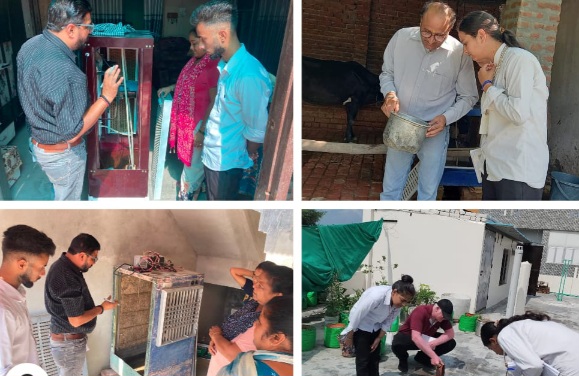
He listed common breeding sites that must be emptied, cleaned and dried weekly: coolers, refrigerator trays, flower vases, animal drinking containers, old tyres, coconut shells, broken vessels, saucers under plant pots, drums kept on rooftops and any water-storage vessels. All such containers should be kept covered. Water in bottles used for money plants and birds’ drinking bowls should be changed daily or at least once a week.
To prevent dengue and malaria, residents must ensure no water accumulates around homes and that drains are cleaned regularly. To avoid mosquito bites during early morning and evening, people should wear full-coverage clothing, use mosquito nets, and apply repellents or anti-mosquito creams when necessary. Window and door screens should be fitted.
Dr Bains warned that anyone experiencing high fever, body aches, headaches, pain behind the eyes, vomiting, red rashes on the skin or sudden severe weakness should immediately visit the nearest government health facility for testing, as these may be dengue symptoms. He advised against self-medication, especially with painkillers that can be harmful without medical advice. Only paracetamol should be used for fever and patients must consume plenty of fluids such as water, fruit juices and coconut water.
Health department teams from Harta Badla block are conducting door-to-door larval surveys, educating residents, identifying mosquito breeding sites and providing health advice as needed in both rural and urban areas. Awareness activities are also being organised in schools, anganwadis, panchayats and other community institutions in coordination with local bodies.
The health department appealed to all block residents to observe every Friday as “Fry Day–Dry Day”, ensure cleanliness around their homes, empty and thoroughly dry all water-holding containers once a week and cooperate fully with health teams. It said only collective effort can ensure effective control of diseases like dengue and malaria.
Sweep Clean, Drive Away Mosquitoes —
 Jul 24, 2026

